|
Understanding the Treatment Process for Heartworm-Positive Dogs
Understanding the Treatment Process for Heartworm-Positive Dogs — and Why Prevention Matters
Heartworm disease is one of the most serious health threats facing dogs today, especially in warmer states where mosquitoes are active year-round. As an animal rescue organization, we see far too many dogs arrive heartworm-positive — a condition that is completely preventable yet potentially life-threatening.
In this article, we’ll walk you through what heartworm disease is, how treatment works, what owners can expect, and why consistent prevention is absolutely essential.
What Is Heartworm Disease?
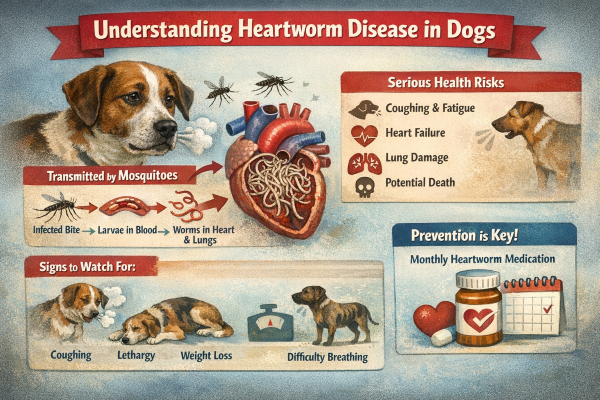
Heartworm disease is caused by a parasite (Dirofilaria immitis) transmitted through mosquito bites. When an infected mosquito bites a dog, microscopic larvae enter the bloodstream. Over time, these larvae mature into long, spaghetti-like worms that lodge in the heart, lungs, and blood vessels.
Untreated, heartworms can cause:
- Severe lung disease
- Heart failure
- Organ damage
- Death
Because symptoms often appear late — coughing, fatigue, weight loss, difficulty breathing — many owners have no idea their dog is infected until the disease is advanced.
The Heartworm Treatment Process
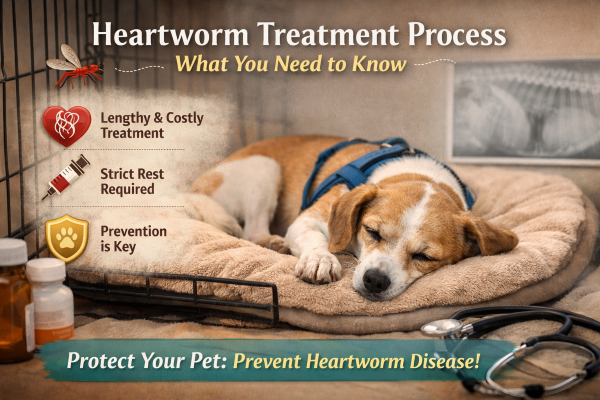
Treating a heartworm-positive dog is a lengthy, careful, and expensive process. But it is treatable, and with proper medical care and strict rest, many dogs go on to live full, healthy lives.
Below is a step-by-step overview of the typical treatment protocol used by most veterinarians and animal welfare organizations.
1. Initial Vet Exam & Diagnostics
- Heartworm antigen test
- Bloodwork
- X-rays or ultrasound
- Physical exam
2. Stabilization and Preparing the Body
- Doxycycline to target Wolbachia bacteria
- Heartworm prevention medication
- Steroids or other medications if needed
This phase usually lasts about one month.
3. Strict Exercise Restriction
This step is critical. Dogs must remain calm and quiet to avoid dangerous complications as heartworms begin to die.
- No running, playing, or jumping
- Crate rest or controlled confinement
- Leash walks only for bathroom breaks
4. Melarsomine Injections (Adulticide Treatment)
Most rescues follow the three-injection protocol:
- Injection 1
- 30 days of rest
- Injections 2 and 3 given 24 hours apart
5. Continued Rest & Monitoring
- Coughing
- Lethargy
- Trouble breathing
- Fever
6. Re-Testing
About six months after treatment, dogs are retested. Most successfully test negative and can return to normal activity.
Why Prevention Is Non-Negotiable
- Treatment is expensive ($1,000–$1,500+)
- Treatment carries risk
- Prevention is affordable
- Heartworm disease exists in all 50 states
How You Can Help
- Adopt a heartworm-positive dog
- Foster during treatment
- Donate to cover medical costs
- Educate others about prevention
Final Thoughts
Heartworm treatment is a journey requiring patience, careful veterinary oversight, and love. With the right care, dogs can recover fully and live long, healthy lives.
Prevention remains the key. One small monthly dose can protect your dog from one of the most serious diseases they may ever face.
|
|